01 / DISCOVER
Market & competitor scan
Map comparable products, claims, user benefits, technical approaches and visible gaps.
Tech Vision Engineering gives medical-device leaders an experienced external view on product concepts—studying the market, challenging assumptions, identifying meaningful improvements, and connecting the idea to testing, manufacturability and validation.
Development teams know their technology. I add the viewpoint of an inventor, validation engineer and product evaluator—looking across the competitive landscape and asking where the concept can become simpler, more useful, more testable and more defensible.
The goal is not to generate ideas for their own sake. It is to expose better options early, before design decisions become expensive to reverse.
Map comparable products, claims, user benefits, technical approaches and visible gaps.
Test the value proposition and examine alternative mechanisms, features and workflows.
Connect ideas with requirements, measurement, test methods, manufacturability and validation.
A short, fixed-scope project for one concept, product or development direction. Designed to give a CEO or development lead useful outside insight without committing to a long consultancy engagement.
Request a scoping callSupported development and introduction of a new pump version through drawing review, manufacturing and measurement-equipment validation, test-method validation, supplier collaboration and risk-based quality controls.
Validated design-verification test methods using ZwickRoell testXpert and proposed a simpler, more efficient fixture concept for holding autoinjectors.
Developed product ideas through market research, evaluation, prototypes, 3D-printed parts, IP protection, marketing materials and company outreach—funded and managed independently.
Created measurement strategies, selected equipment and fixtures, supported design reviews, suppliers and NPI readiness across drug-delivery and precision-manufacturing environments.
Led laboratory investments, compared measurement technologies and expanded a lab supporting a 3,000-employee manufacturing plant.
Defined and executed URS/IQ/OQ/PQ, MSA/Gage R&R and test-method validation under ISO 13485 and regulated manufacturing expectations.
Could a standard glass prefilled syringe keep its staked needle dry during storage by adding a small internal stopper-valve—without changing the glass barrel, needle-staking process or autoinjector interface?
BD patent EP0588148B1 describes a syringe with a sliding isolation stopper and rigid plug. Pressure moves both parts to the distal end; the stopper then moves relative to the plug, opening channels toward the needle.
Gerresheimer Gx Inbeneo® keeps the needle separated from the primary container until use. A double-ended needle pierces the cartridge septum during activation.
The initial question was “Can a valve be designed?” The decisive question became: “Can it remain sterile, compatible and predictably open after the full shelf life—while adding no unacceptable fill-finish, dose, force or manufacturing penalty?” Under the original constraints, the answer was not convincingly yes.
AI accelerated the search; engineering judgement made the decision. AI was used to widen patent and competitor discovery, connect mechanisms across sources and test counterarguments quickly. The final no-go came from structured engineering review: requirements, physical mechanism, shelf-life risks, manufacturing fit and commercial differentiation.
Public-source references: EP0588148B1 — Syringe having needle isolation features · Gerresheimer/Midas Pharma — Gx Inbeneo functional testing. This case study is a retrospective concept-screening example, not a claim of product development for either company.
Years of applying a structured licensing method changed how I evaluate product opportunities: start with the market, develop for a real need, prove the concept clearly, protect what matters, and communicate the benefit.
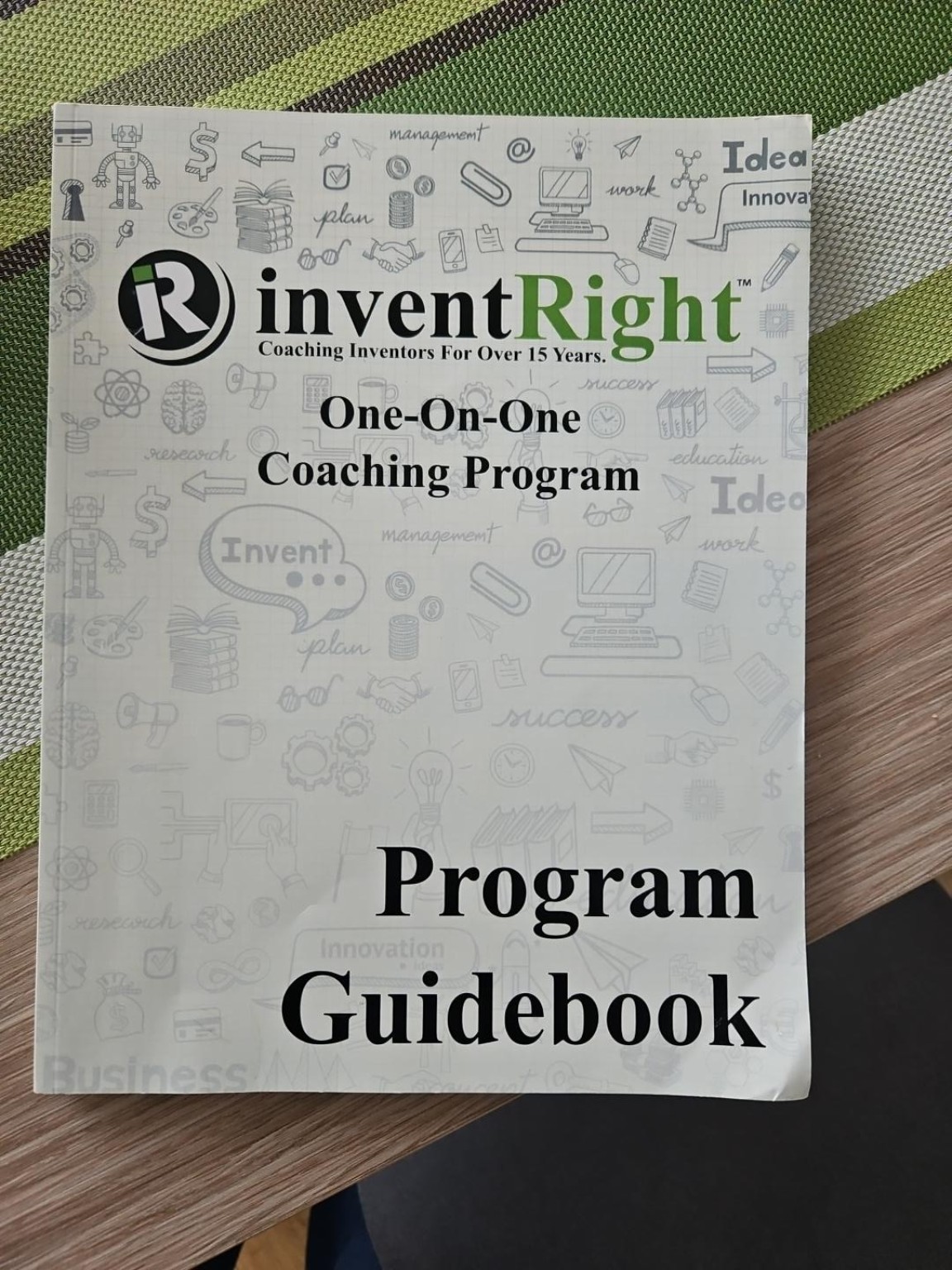
Applied learning through the InventRight coaching framework. Tech Vision Engineering is not presented as affiliated with or endorsed by InventRight.

Founder of Tech Vision Engineering. Mechanical engineer and independent consultant based in Romania, working with medical-device and regulated-manufacturing teams across Europe.
Experience includes ViCentra, Haselmeier, Phillips-Medisize, Bespak Medical, Continental and Siemens environments.
Share the product area, development stage and decision you are facing. We can define a focused review with clear boundaries, deliverables and a fixed fee.
Contact Cristian Istrate →